
How Brainwave Entertainment Helping to achieve Mental Health
In this post I will compare few Digital BrainWave Entertainment Audio Programs which deliver 7 min. to 12 min listening audio tracks to keep healthy mind. Now a days in this digital era everything is moving so fast, lots of things to explore, lot of exposure of information which overwhelms our mind and we get disconnected to our own mind. Healthy mind or Mental health is as important as healthy body rather I would say it is more important than body. As a health coach working from 15 years in this field I always observe people ignore their mental health and only focus on body. Remember only healthy mind can build healthy body. So let’s explore what Audio Program are available which claims healthy mind.
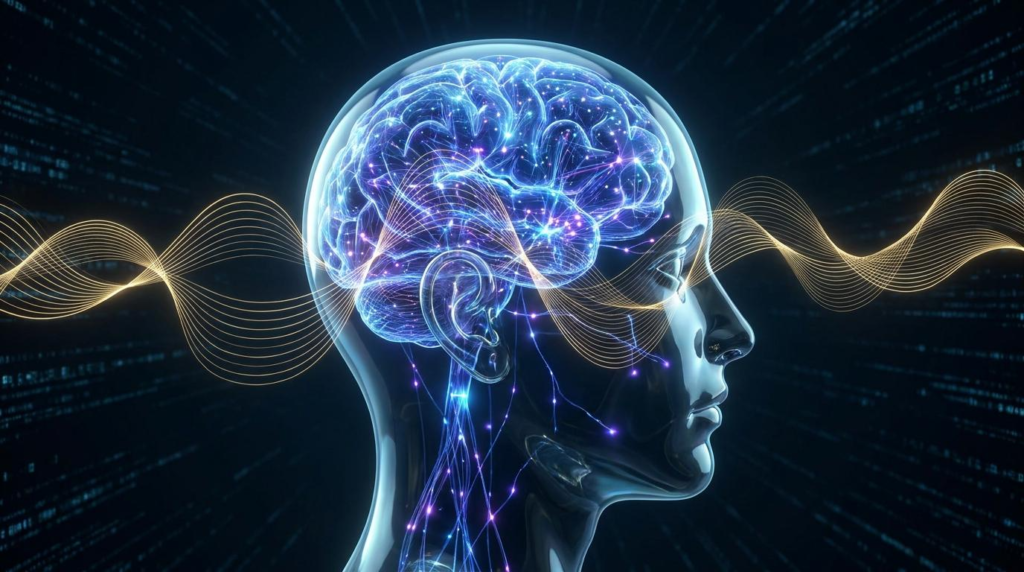
We have all, at one time or another, experienced the peculiar sensation of cognitive depletion. It manifests as a pervasive mid-afternoon fog, a lethargy that no amount of espresso seems capable of piercing. We exist in an era that demands perpetual engagement, yet we frequently neglect the very instrument required to sustain it: the human brain. We are beginning to recognize that mental health is not merely the absence of pathology, nor is it a luxury afforded to the idle. It is the fundamental operating system of our lives. When that system falters, productivity declines, and our connection to the world around us frays. It prompts a fascinating inquiry: rather than attempting to chemically jolt our minds back into focus, could we instead tune them?
A Blast from the Past: From 1839 to the Modern Ear
To understand the current fascination with “brainwave entrainment,” one must trace its intellectual lineage. The foundational observation occurred in 1839, when the Prussian physicist and meteorologist Heinrich Wilhelm Dove discovered the phenomenon of binaural beats. He noted that when two slightly different auditory frequencies are presented separately to each ear, the brain perceives a third, rhythmic “beat.”
For over a century, this remained a mere auditory illusion, a curiosity of physics. It was not until 1973 that Dr. Gerald Oster, a biophysicist, resurrected the concept in a seminal paper. Oster proposed that these binaural beats could be utilized not just for neurological imaging, but potentially for psychological therapy. Watching the evolution of this concept is remarkable. What began as an abstract postulation in mid-nineteenth-century laboratories has quietly transitioned into digital files we can stream from our phones as we lie in bed.
The Mechanics of Sound: How Acoustic Entrainment Functions
The underlying premise of brainwave entrainment is surprisingly elegant. It suggests that by introducing specific frequencies, we can subtly nudge the brain’s electrical activity to mirror those rhythms—a biological phenomenon known as the frequency-following response.
What is Brainwave Entrainment?
Brainwave entrainment is a neuro-acoustic method that uses external stimuli—such as audio frequencies, binaural beats, or isochronic tones—to naturally synchronize the brain’s electrical activity with a target frequency. Discovered initially in 1839, this mechanism allows individuals to shift out of stressed states and safely induce cognitive states optimized for deep focus, learning, or relaxation without pharmaceutical intervention.
When we examine the literature, three primary acoustic zones emerge:
- Theta Waves (4-8Hz): This is the frequency of deep meditation and the threshold of sleep. It is where we often find those sudden, intuitive flashes of creativity—a mental state the Buddhists might liken to a quiet, receptive mind.
- Beta Waves (14-30Hz): This is the domain of pragmatic, waking consciousness. Entrainment in this range is utilized for high-speed focus, sustained attention, and the friction of deep work.
- Gamma Waves (30-100Hz): The highest frequency, associated with peak cognitive functioning, complex memory recall, and sudden moments of profound mental clarity.
The current scientific consensus on these audio programs remains cautiously optimistic. Neurologists and psychologists largely view them as low-risk, non-invasive tools. They are not pharmaceutical replacements, but rather supplementary instruments that, when paired with a mindful lifestyle, may aid in stress reduction and cognitive regulation.
Skepticism and the Hype Machine
Naturally, any intervention promising to optimize the mind invites skepticism, and rightly so. The most common critique leveled against binaural beats is the “placebo” debate. Critics argue that any reported clarity or relaxation stems merely from the expectation of those results. Yet, one must ponder: if the mind utilizes belief to generate a tangible state of focus, does the mechanism matter? The utility remains.
More concerning is the surrounding commercial ecosystem. There is a notable controversy surrounding digital marketplaces, where pseudonymous creators make wildly unverified claims—suggesting clandestine links to NASA research or Einstein’s hidden rituals—to sell digital downloads. Furthermore, in its relentless pursuit of sensation, some media outlets have previously fear-mongered about “digital drugs,” suggesting these frequencies could be addictive. To date, there is no clinical evidence to suggest that listening to rhythmic sound waves poses any risk of chemical-style dependency.
An Examination of the Current Brain Wave Frequencies Digital Programs
Curiosity led me to examine several of the prominent programs currently occupying this space. Approaching them not as miracle cures, but as acoustic tools, I noted distinct differences in their design and experiential output.
1. Genius Switch This program is structured around 40Hz Gamma waves, often referred to as the frequency of peak performance. Engaging with its 12-minute session does not feel like the jarring jolt of caffeine; rather, it is akin to the sensation of a room suddenly being flooded with natural light. It seems best suited for professionals requiring sustained cognitive endurance.
2. The Genius Wave Perhaps the most discussed program of its kind, formulated with an emphasis on the Theta state. Its design is minimal—merely seven minutes a day. The experience feels designed to bypass the analytical mind and access a more latent, intuitive creativity. It appeals primarily to those seeking a shift in perspective rather than raw, analytical focus.
3. The Brain Song This track offers an interesting interplay, blending Alpha and Gamma waves. The stated goal is a harmonization of mood. Listening to it feels less like a utilitarian cognitive “hack” and more like a mental decompression. It offers a soothing stabilizing effect, potentially useful for tempering the low-grade anxiety of daily modern life.
4. The Memory Wave Targeting the brain’s natural clearing processes through high-frequency Gamma activation, this 12-minute acoustic ritual feels distinctly intense and deliberate. It is geared toward the preservation of mental sharpness and memory recall, making it an intriguing consideration for students or those examining the mechanisms of cognitive longevity.
5. Neuro Energizer This program attempts to bridge the hemispheres of the brain to achieve a synchronized “Flow State.” I found it to be a fascinating alternative to the ubiquitous afternoon energy drink. It aims to provide a clean, steady undercurrent of wakefulness without the jittery physiological taxation of stimulants. Comes with 3 bonuses. It comes with 60 days Money back Guarantee.
The Horizon: Your Brain in 2030
As we look to the future, the static nature of these current audio tracks will likely seem archaic. The logical progression is a synthesis of neuro-acoustics and artificial intelligence. We are moving toward a paradigm of true personalization, where algorithmic soundtracks interface with wearable technology, reading biometric data such as heart rate variability in real time. Imagine an acoustic environment that senses your rising stress and fluidly shifts its frequencies to guide you back to baseline.
A Final Contemplation
We readily invest our capital in gym memberships, supplements, and ergonomic chairs, yet we are remarkably hesitant to invest in the operational hardware of our minds. For a cost roughly equivalent to a week’s worth of passing indulgences, these acoustic programs offer a fascinating avenue for self-experimentation.
Whether you require the raw, stabilizing focus of the Genius Switch or the intuitive softening provided by The Genius Wave, the decision to explore is a decision to reclaim agency over your own attention. I invite you to consider the frequencies that might best align with your current cognitive aspirations, and perhaps, begin your own exploration into the architecture of your mind.
All Programs are good and if you are looking for brain food or supplements then I would suggest you should try one out of these 5 program and see the difference. No harm by listening to the Brain waves and every program offers how to use the product, when to expect the difference and what to expect as you start listening everyday. Stay Committed to your own Mental health and fell the freedom. Results vary person to person, stress level, work-life balance so always remember consistency is the key to see positive results.
Disclaimer: All these products is not intended to diagnose, treat, cure or prevent any disease. All Audio Brainwave Frequencies should not consider as a supplements. Results vary person to person, lifestyle, and surroundings. As a reviewer of these product and as per affiliate disclaimer contact Owner/Creator of these products in case if audience want more info.
Some Products feedback are from real users Experience and my personal experience.